Korea, Germany sign high-tech partnership as industry ministers meet in Seoul
The industry ministry signed a joint declaration with Germany's economy ministry and supported nine corporate agreements, widening cooperation beyond trade into supply chains, critical minerals and manufacturing AI.
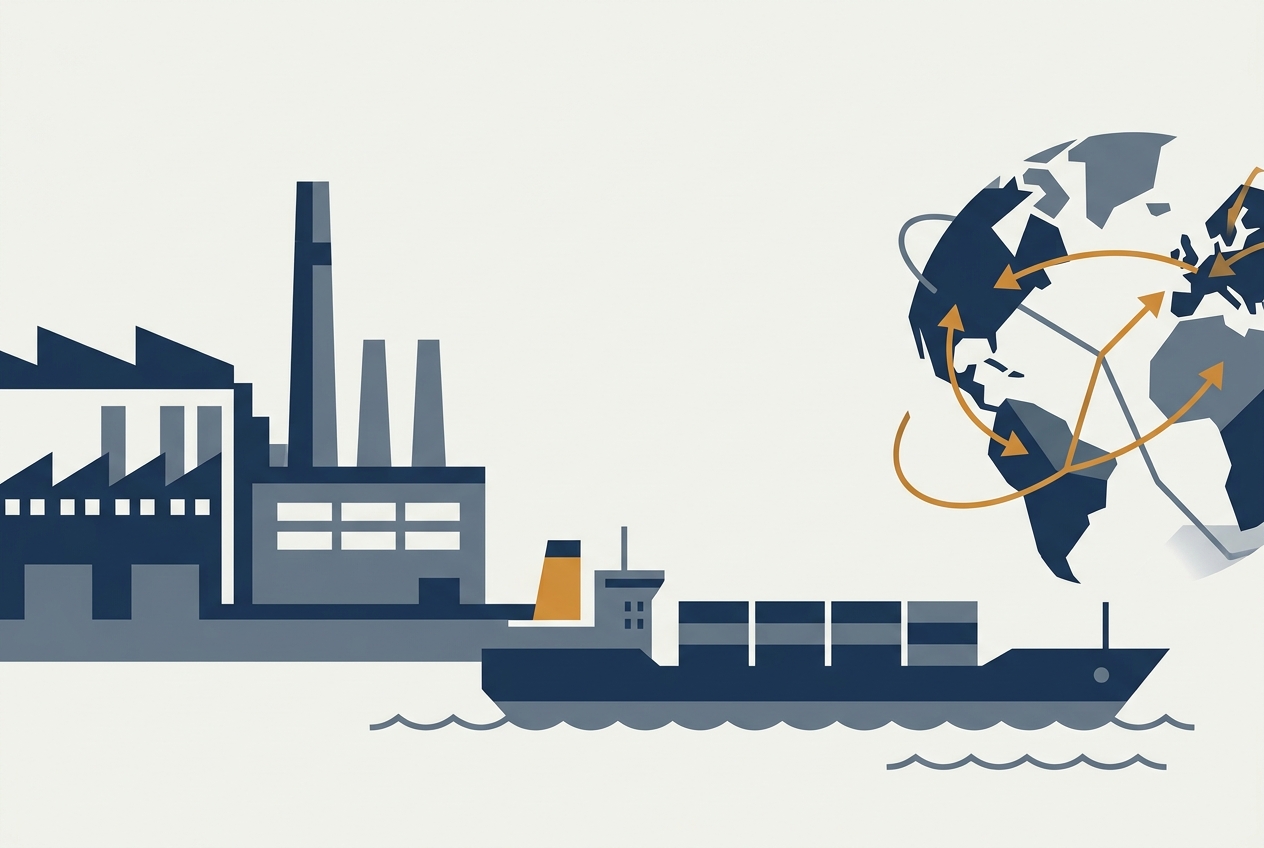
The industry ministry said Friday it signed a joint declaration with Germany's Federal Ministry for Economic Affairs and Energy to widen economic cooperation beyond trade and investment into economic security, supply chains and advanced industries.
Trade Minister Kim Jung-kwan and German Vice Minister Stefan Rouenhoff took part in the signing in Seoul, on the sidelines of the 19th Asia-Pacific Conference of German Business. The declaration was accompanied by support for nine memorandums of understanding between companies and institutions of the two countries.
Kim used the conference panel to argue that Korea and Germany, both heavily dependent on manufacturing and exports, face common pressure as strategic competition between the United States and China deepens, protectionism spreads and critical minerals are treated as strategic assets. Cooperation with the Asia-Pacific region, which holds resources and growth potential, and solidarity among trusted partners were needed to steady supply chains and reinforce economic security, he said.
Citing the two economies' complementary strengths, Kim proposed joining Korea's semiconductor and battery manufacturing capacity with Germany's precision machinery and industrial automation, and expanding joint research in manufacturing AI, chips and critical minerals. He presented Korea's push to convert its manufacturing base to AI, known as the M.AX policy.
Under the framework, the two sides will share information and operate early-warning systems on critical mineral supply chains, cooperate on smelting, refining, recycling and joint projects in third countries, protect core technologies and work together in semiconductors, mobility, batteries and industrial AI. A senior-level consultative body is to identify further projects.
"Korea and Germany are industrial powers leading global manufacturing and key partners that must respond jointly to changes in the global economic order," Kim said. "Based on this economic and high-tech partnership, we will develop bilateral cooperation from a trade and investment relationship into a strategic partnership covering economic security and advanced industries."
The conference, held every two years in a different Asia-Pacific city since 1986, marks its 40th anniversary this year. It is the first time it has been held in Korea since the 11th edition in 2007.
In the evening, about 600 government and business figures from the two countries and the wider Asia-Pacific region attended a Korea Night reception at the Westin Parnas Seoul, where Korea's manufacturing AI strategy and investment environment were presented. Trade Minister Park Jung-sung, who heads the ministry's trade negotiation office, asked German and Asia-Pacific companies to stay open.
"Overcoming the difficult international economic situation requires expanding partnerships, not building walls," Park said. "With protectionist policies such as the EU's Industrial Accelerator Act spreading, I ask Germany and Asia-Pacific countries to join us in openness and innovation."
What this article is based on
Every fact in this article can be checked against the primary documents below.
- Government산업통상자원부 산업 보도자료· Ministry of Trade, Industry and Energy· accessed Oct. 31, 2026
- Government한·독 협력 프레임워크· korea.kr· accessed Oct. 31, 2026
- Government[발언] 이재명 대통령· korea.kr· accessed Oct. 31, 2026
- Government[발언] 이재명 대통령· korea.kr· accessed Oct. 31, 2026
© New Era Korea Daily. All rights reserved.