Korea, Germany renew energy pact to link transition with industrial competitiveness
The two manufacturing powers updated a joint declaration of intent covering renewables, power grids, clean hydrogen and low-carbon technology, with a senior official calling the shift to clean energy a question of future industrial strength.
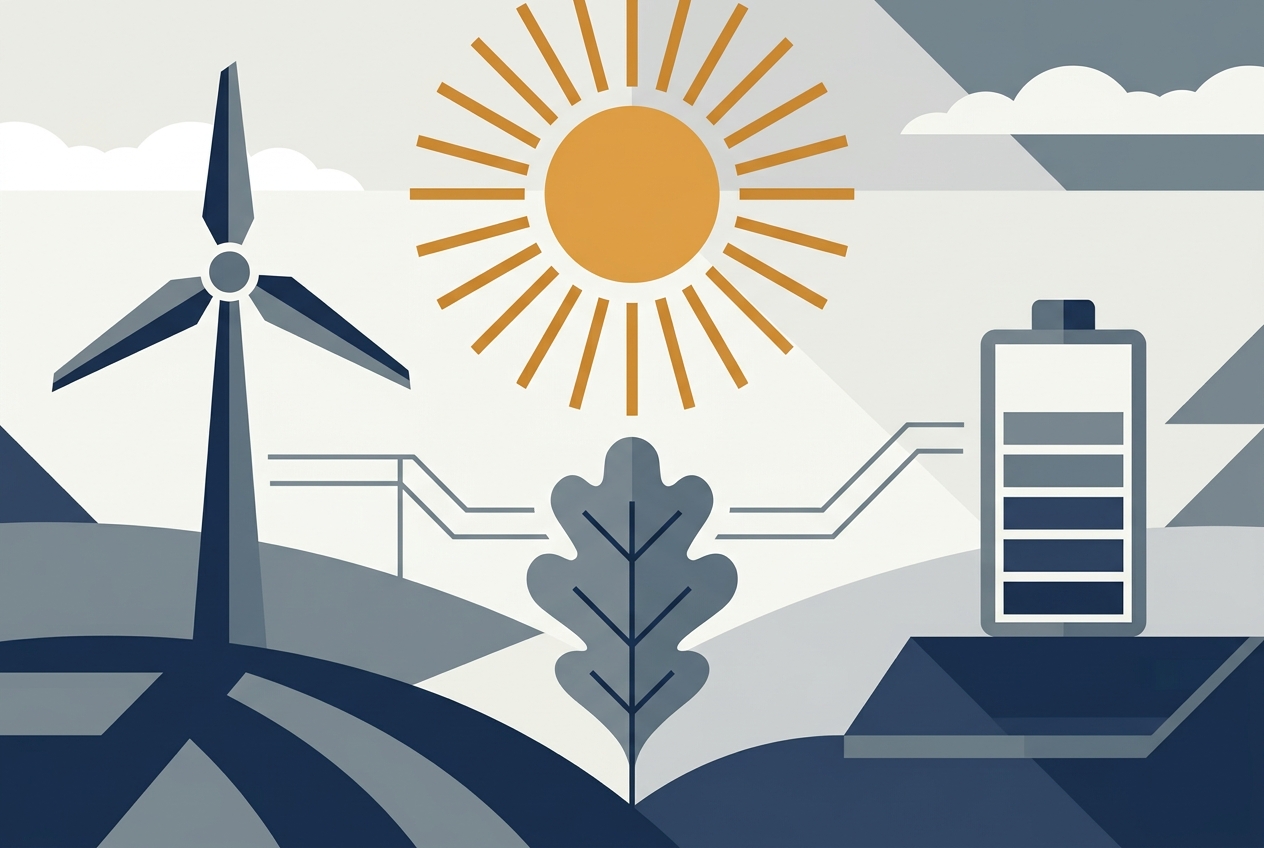
The environment ministry said Friday that South Korea and Germany renewed a joint declaration of intent on energy cooperation, as the two manufacturing powers seek to turn the energy transition into an industrial opportunity and address common challenges including power grid stability.
Vice Minister Lee Ho-hyun and Stefan Rouenhoff, a parliamentary state secretary at Germany's Federal Ministry for Economic Affairs and Energy, signed the updated declaration at the InterContinental Hotel in Gangnam District, Seoul. The two sides discussed ways to widen cooperation on energy policy and clean energy.
The ministry said Korea and Germany have pursued an energy partnership since 2019, and that the update reflects the ministry's launch in October last year as well as changing energy conditions and both countries' decarbonization targets.
Under the declaration, the two countries will strengthen cooperation on renewable energy and energy efficiency, clean hydrogen, power grids and energy storage systems, and artificial intelligence, digital and innovative low-carbon technologies. They will focus in particular on grid stability and flexibility as renewables expand, the digitization of energy systems, and electrification and decarbonization in industry, pursuing faster decarbonization and a stable, affordable energy supply while respecting each country's energy conditions.
Implementation will be reviewed through regular consultations between the Korea-Germany energy transition cooperation committee and working-level departments, with energy days, workshops, on-site exchanges and joint research continuing.
Lee said the shift to a renewables-centered energy system and the construction of stable, flexible grids are key tasks for both countries that go beyond responding to the climate crisis to shape future industrial competitiveness. "With this renewal of the joint declaration of intent, the two manufacturing powers will combine policy experience and technological capability and expand practical cooperation between research institutes and companies to make the energy transition an opportunity for industrial innovation," he said.
What this article is based on
Every fact in this article can be checked against the primary documents below.
- Government기후에너지환경부 환경 보도자료· Ministry of Climate, Energy and Environment· accessed Oct. 30, 2026
- Government[발언] 이호현 기후에너지환경부 제2차관· mcee.go.kr· accessed Oct. 30, 2026
© New Era Korea Daily. All rights reserved.