Daegu AI-bio drug discovery hub launches
South Korea's science ministry announced Daegu's first AI-bio hub for synthetic drug discovery, which will pair AI models with automated laboratory testing.
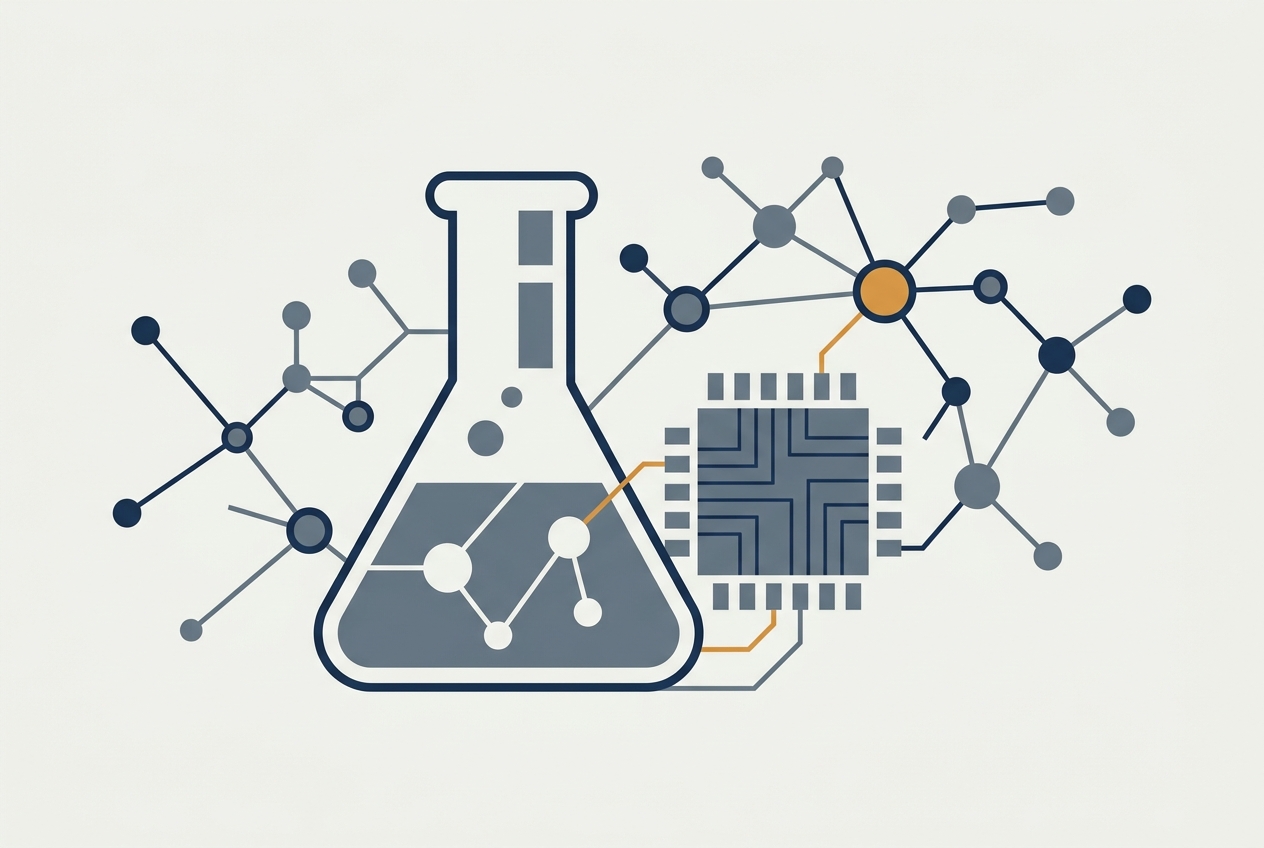
South Korea's science ministry said Wednesday that the first AI-bio innovation hub for synthetic drug discovery had launched in Daegu, as global competition shifts from AI models toward systems linked to laboratory experiments.
Drug discovery is a high-risk field in which identifying and validating new treatment candidates can take a long time and require substantial costs. The ministry said development has mainly relied on researchers' experience and repeated experiments. Synthetic drugs are the focus of the first pilot because they are a core field of the global pharmaceutical market and are highly suited to AI applications.
The pilot, part of the K-Moonshot AI drug-discovery program, will use a Lab-in-the-Loop model: AI proposes drug candidates and experimental conditions from bio data, and automated platforms test them and return results to improve the models.
Kyungpook National University will lead a Daegu consortium that includes Kyungpook National University Hospital, the Daegu Gyeongbuk Advanced Medical Industry Promotion Foundation and Univa. It will oversee the AI-based synthetic-drug Lab-in-the-Loop research system, build AI computing infrastructure and train AI-bio specialists. The hospital plans to use patient-based data from about 2 million people to establish a medical-data system for AI drug development, while Univa will develop foundation models and an AI research environment that can incorporate data and experimental results.
The promotion foundation will work with HLB Life Science, Arontier, Molcube and Able Labs on high-speed validation infrastructure. The work will use A2-level, partially automated laboratories, in which people set up and maintain systems and carry out some synthesis and characterization.
"The competitiveness of future drug development will depend on how effectively AI technology and data are connected to and used in real experimental settings," Oh Dae-hyeon, the Ministry of Science and ICT's future strategy technology policy director, said. The science ministry plans next year to expand into additional AI-bio fields based on the pilot hub's performance.
What this article is based on
Every fact in this article can be checked against the primary documents below.
- Government과학기술정보통신부 과학기술 보도자료· Ministry of Science and ICT· accessed Aug. 12, 2026
- Government[발언] 오대현 과학기술정보통신부 미래전략기술정책관· korea.kr· accessed Aug. 12, 2026
© New Era Korea Daily. All rights reserved.