Environment ministry outlines 100GW renewable energy drive for AI
South Korea's environment ministry has set out plans to expand renewable power and water supplies for AI facilities while advancing industrial decarbonisation, electric vehicles and a circular economy.
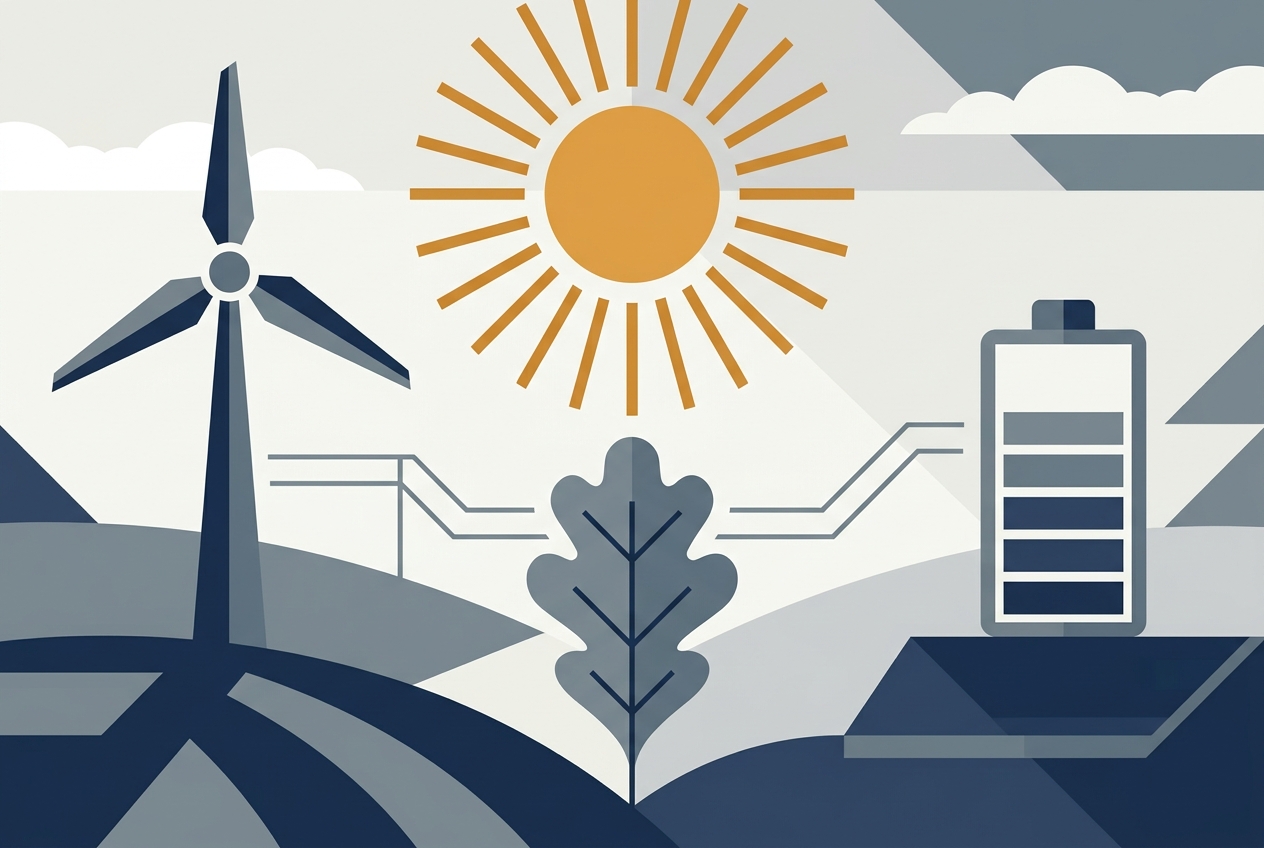
The environment ministry said it will pursue early deployment of 100GW of renewable energy capacity in its 2026 second-half agenda, seeking clean, stable electricity and water for AI data centres and advanced industrial complexes.
The measures include large-scale solar projects in reclaimed land and border areas, mandatory solar installations on factory roofs and a quicker rollout of offshore wind projects. The ministry will also build electricity-grid capacity ahead of occupancy by AI data centres and advanced industrial complexes.
The ministry will shorten reviews of the National Water Supply Master Plan to every two years from five to respond more flexibly to shifts in water demand. It also plans to link agricultural and power-generation water resources, reuse treated water from public sewage facilities for new industrial complexes and expand groundwater-storage dams in drought-prone areas. "We will lead the AI revolution by driving the success of major projects with clean and stable electricity and water supplies, and overcome the climate crisis through a green transformation and circular economy," Kim Seong-hwan, the environment minister, said.
The ministry will join other departments in releasing a K-GX strategy in the third quarter for lower-carbon, higher-value transitions in steel, petrochemicals, refining, cement and semiconductors. It also aims for electric vehicles to account for 50 percent of new vehicles by 2030 and for public-sector and commercial vehicles to be fully electric, with support planned for taxis, rental cars, police vehicles and delivery motorcycles.
It will lift the mandatory recycled-material share in PET beverage bottles to 30 percent by 2030 from 10 percent and plans recovery systems for rare-earth permanent magnets, discarded telecom equipment and end-of-life electric-vehicle batteries.
The ministry also plans flood defences for extreme rainfall, using agricultural reservoirs and hydropower dams for additional water storage and deploying AI surveillance cameras and digital-twin monitoring along national rivers. It will provide chemical-safety training for workers at about 1,700 workplaces, block the sale and distribution of unapproved biocidal products and establish an AI-based rapid toxicity-assessment foundation by year-end.
What this article is based on
Every fact in this article can be checked against the primary documents below.
- Government기후에너지환경부 환경 보도자료· Ministry of Climate, Energy and Environment· accessed Aug. 17, 2026
- Government기후에너지환경부 역할· mcee.go.kr· accessed Aug. 4, 2026
© New Era Korea Daily. All rights reserved.